
When I saw someone walk into a room and change it without saying anything for the first time, I thought I probably had imagined it. He adjusted his posture a bit, let a silence sit a beat longer than was comfortable, and by the time he started speaking, every person at the table was oriented toward him.
What I found, after enough time spent looking, was that the difference was perceptual. These people saw the dynamics of all interactions clearer than those around them. They saw the power structures, the emotional currents, and the real agendas beneath the ones that were stated.
The techniques in this book are not inventions. Every one of them has been practiced by someone who understood it intuitively, long before a researcher named it and documented it.
Any conversation you had in your life has also been a kind of a negotiation.
Human social interaction has a visible layer and an invisible one. The visible layer is what people say, what they agree to, what they appear to want. The invisible layer is what has been communicated beneath that.
The distinction between influence and manipulation is not one of technique. It is one of intention and consent. The same knife that performs surgery can be used as a weapon. The variable is the hand holding it.
Trick 1 — Mirror Body Language to Build Instant Rapport
In the 1960s, researchers at UCLA began documenting something that skilled negotiators and diplomats had long practiced intuitively: the systematic alignment of posture, pace, and gesture with the person across the table produced measurable changes in how that person perceived the interaction.
Mirroring is the oldest trust mechanism in human social behavior because it is the one most directly wired into neurology. The critical variable is subtlety. The version that works operates on delay and approximation.
The person who feels understood first will listen to almost anything afterward.
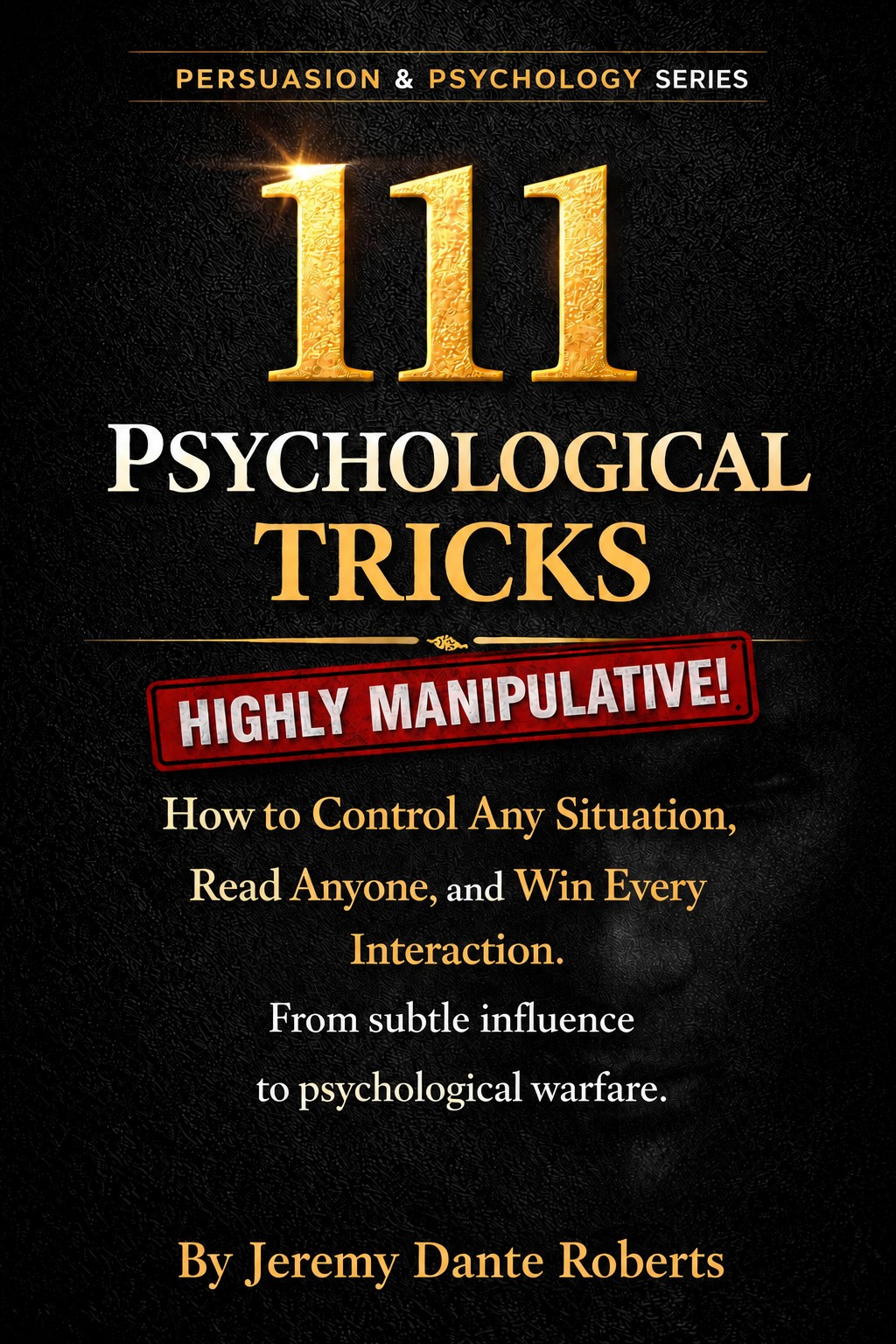
111 Psychological Tricks catalogs the subtle tactics people use to influence, persuade, and read one another — from everyday negotiation to recognizing when those tactics are being used on you.
J. D. Roberts writes with an emphasis on awareness: understanding influence works both ways, as a tool and as something worth spotting in others.
Readers curious about persuasion, negotiation, and social dynamics — and anyone who wants to better recognize manipulation when they see it.