
Fortunes are not destroyed by markets.
Markets are efficient, impersonal, and mostly correctable. When one turns against a fortune, mechanisms exist to absorb the blow — hedges, advisors, time. What markets cannot protect against is what happens inside the house.
When a great fortune collapses — and collapse here means something more total than shrinking or stumbling, it means disappearing across a generation or two — the cause is almost never external. It's structural. It's relational. More than either, it's the well-documented failure of the systems meant to govern concentrated wealth once the person who built it is no longer the one controlling it.
Power concentrates around a founding figure, and the structure grows dependent on that concentration. Then the figure ages, or dies, or simply loosens their grip, and a system optimized for expansion under a single authority is suddenly asked to operate under conditions it was never built for: shared control, contested succession, the full exposure of psychological arrangements the founder's presence had quietly been holding together.
The announcement came not through a document or a meeting or a lawyer's carefully worded letter, but through a silence that descended over the dinner table one evening in the autumn of 1985 and did not fully lift for the rest of John du Pont's life.
His mother had decided.
What his mother decided that autumn was that Foxcatcher Farm would be left, upon her death, not only to John but structured in ways that would limit his operational authority over the estate and its resources. She did not trust her son's judgment with the full weight of what she was leaving him.
She died in 1988.
The instability she had spent decades containing had nowhere left to go but out, and it released into the vacuum she left behind.
He was sixty-one years old when he shot Dave Schultz in the driveway.
The fracture was not the shooting. The fracture was 1985. The shooting was simply the moment the crack reached the surface.
The du Pont name arrived in America in 1800, when Éleuthère Irénée du Pont de Nemours stepped off a ship in Newport, Rhode Island, carrying a letter of introduction from Thomas Jefferson and a comprehensive knowledge of gunpowder chemistry. Within two years he had a black powder mill running on the Brandywine Creek in Delaware; within a generation it had become the foundation of one of the largest industrial fortunes in American history.
By the time John Eleuthère du Pont was born in 1938, the family name wasn't merely wealth — it was infrastructure.
Inherited wealth without inherited judgment is not a foundation. It is an accelerant.
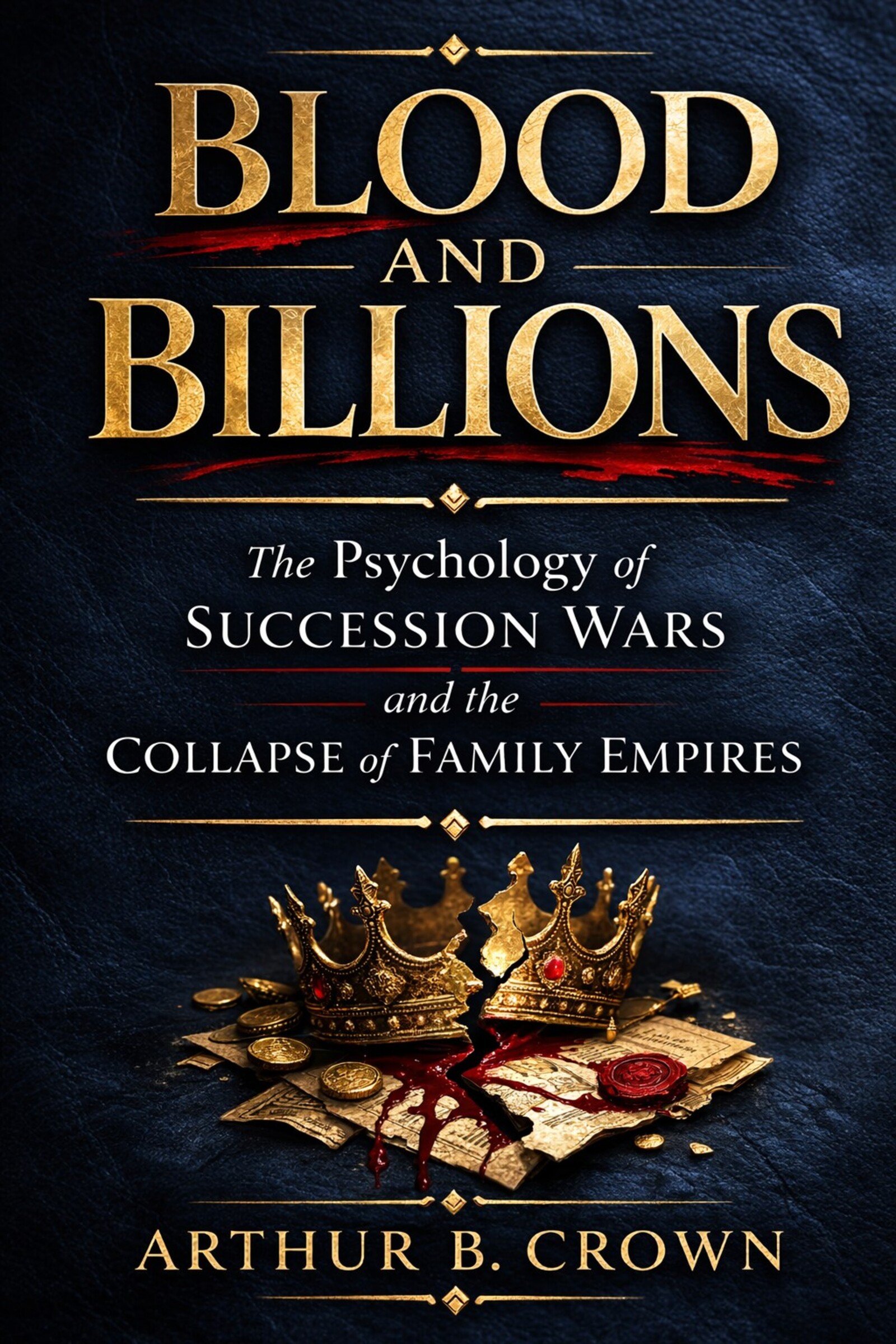
Blood and Billions examines what actually destroys great fortunes — not markets, but what happens inside the family once the person who built the wealth is no longer the one holding it together. Drawn entirely from public record, the book traces the same collapse sequence across a century of dynasties: the du Ponts, the Bronfmans, the Astors, the Redstones, the Hiltons, and more.
Arthur B. Crown, author of They Lived Two Lives and The Deadly Side of Billionaire Living, turns his lens on succession itself — treating each case as an examination of structure and behavior rather than a verdict on any individual, and distilling the pattern into what he calls the 12 Laws of Wealth Conflict.
Readers of Arthur B. Crown's other narrative nonfiction, and anyone fascinated by how concentrated wealth reshapes the people and families closest to it once succession is on the table.