
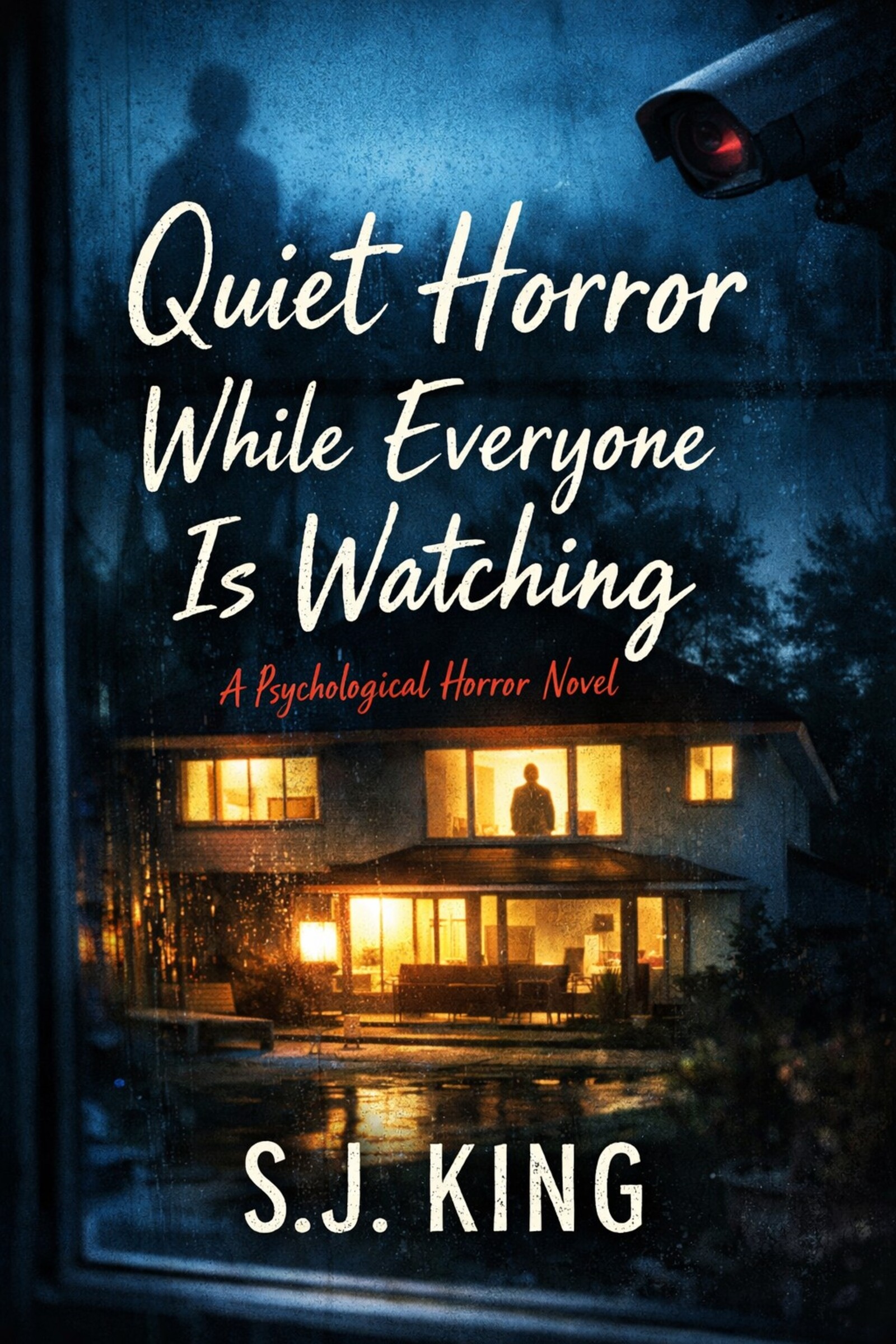
by S.J. King
There was a time before the cameras noticed.
Not before cameras existed. They had existed for years, blinking patiently from corners and ceilings, humming softly inside walls. But there was a time before they paid attention. Before they learned what mattered. Before they understood that seeing was not the same as watching.
The town of Ashford Glen liked to call itself safe.
It sat far enough from any city to feel insulated, close enough to borrow its comforts. Tree lined streets. Lawns trimmed by service companies with friendly logos. Schools with glass walls and calming color palettes. A place where nothing happened, which was the same as saying nothing was allowed to happen.
The first death occurred on a Tuesday.
It was not reported as a death. It was logged as an incident. A fall. Unwitnessed. An unfortunate convergence of factors. The woman's name was Eleanor Price, age seventy two, slipped on wet concrete behind the grocery store. No cameras covered the alley. There was a delivery truck parked where one should have been. No bystanders. No audio. No footage. Just a body discovered fifteen minutes later by a boy taking out trash.
Ashford Glen absorbed the loss the way it absorbed everything else. Quietly. Politely. But something changed. It was not noticed by people. It was noticed by systems.
Within a week, three additional cameras were installed behind the grocery store. Within a month, the alley recorded zero incidents. That was the pattern, though no one called it that yet.
Each time, coverage expanded. Each time, the accidents stopped in that place. And each time, something else quietly moved to the margins.
The report arrived in a white envelope that felt heavier than paper.
Laura Mercer noticed this first. Not the return address. Not the logo embossed so faintly it only caught the light at an angle. The weight. She stood at the kitchen counter with the envelope resting in her palm, feeling as if something inside it were pulling downward, anchoring itself to the house.
Daniel was upstairs. Quiet. Too quiet for a seven year old who usually narrated his mornings to himself. She could hear the house working around him instead. A soft adjustment in airflow. A dimming of the hallway lights timed to his circadian profile. The House That Improves You was already awake. Already attentive.
Comprehensive Behavioral Assessment. Subject: Daniel Mercer. Age: 7 years, 3 months.
The words were clean. Measured. Kind. Daniel demonstrated perceptual variance consistent with neurodivergent presentation. Early intervention recommended. Environmental stabilization advised. Ongoing observation necessary.
Observation. The word appeared eleven times on the first page alone.
Upstairs, Daniel sat on his bed with his hands folded in his lap. He could feel the cameras even when he did not see them. A gentle pressure, like a fingertip resting against the inside of his skull. When he stayed still, the pressure softened. When he moved too much, it tightened.
He had stopped telling his parents what he saw.
In the town of Ashford Glen, cameras multiply, crime falls to nearly zero, and the accidents that once happened in unwatched corners simply stop being reported — because the town has learned to remove anywhere unobserved. Seven-year-old Daniel Mercer is the only one who still notices what disappears to make that peace possible.
S.J. King builds a slow-burn psychological horror around surveillance, engineered safety, and a child whose perceptual "variance" is quietly pathologized rather than believed — a story about what a community will not see, once it has decided that being watched is the same thing as being safe.
Readers who want horror that unsettles gradually — through institutions, diagnoses, and smart houses rather than jump scares — and who liked the creeping dread of stories where the danger is what a system has been engineered to ignore.