There is a shelf of books, some of them very good, that treat power as a game with rules. Learn the rules, the promise goes, and you can win. What bothers me about them isn't that they're cynical. It's that they put the reader in the wrong position. They imagine you as a player standing over the board, choosing moves, when most of us spend most of our lives as pieces on someone else's board, inside arrangements we didn't design and can't simply walk away from.
This book starts from that second position. It's about the power you live inside: in the company that employs you, the family you grew up in, the committee you sit on, the marriage you're trying to keep. Those arrangements have shapes. Things flow through some people and around others. You can live inside these shapes for years without seeing them, and most people do. The point of this book is to help you see them.
In the late 1580s a young man named Wei Si, from a poor family in the northern province of Hebei, had gambled away everything he owned. What he did next is hard to imagine: he castrated himself, took a new name, and applied for service in the imperial palace as a eunuch. It was one of the few routes in Ming China by which a man with nothing could get close to anything.
Within a few years Wei had become head of the Directorate of Ceremonial, the eunuch office that handled the emperor's documents, and he was the man who held the vermilion brush. He also took control of the Eastern Depot, the palace's secret police. Reports from across the empire came through his office first, and some of them never went any further.
There's a detail about Wei that most accounts mention, and it makes the story stranger. He was, by nearly every report, illiterate, or close to it. It didn't matter. His power was never about understanding documents. It was about standing where they had to pass.
Every organization has these points, and they're rarely where the chart says. If you want to understand how a place actually works, try asking one plain question for a few weeks: before anything important is decided here, whose desk does it cross? Not who signs it at the end, but who sees it first, who summarizes it, who decides whether it's urgent.
The power was real all the same, and it lived at a chokepoint: the place through which information had to pass on its way to the person who could act on it.
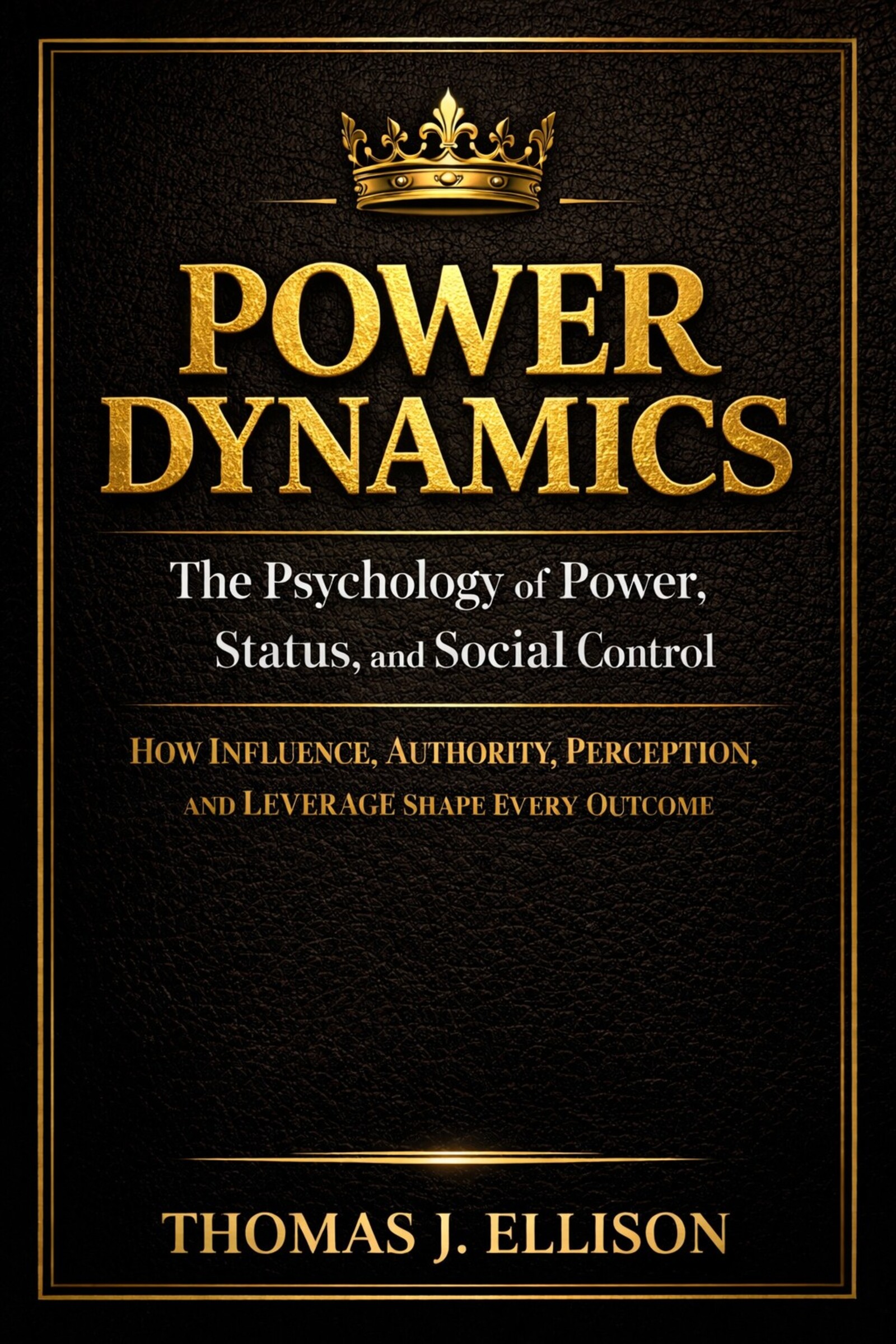
Power Dynamics argues that most of us spend our lives not as players choosing moves on a board, but as pieces inside arrangements we didn't design and can't simply walk away from — the company that employs you, the family you grew up in, the committee you sit on. Built around historical stories, from a Ming-dynasty eunuch who controlled an empire from a document desk to Ottoman harem regents who ruled from behind a screen, the book shows how power actually moves through chokepoints, euphemisms, and unnamed influence.
Thomas J. Ellison offers no laws of power — he's skeptical they exist — only a set of questions readers can learn to ask about any situation they're in: who does this run through, whose approval gets sought, who pays when things go wrong.
Readers who want to understand how influence actually moves through offices, families, and institutions — not a manual for getting your way, but a way of seeing the real structure underneath the official one.