If you've picked up this book, something probably happened to you.
Maybe it was recent. More likely it was some time ago, and you've already talked it through, read about it, perhaps sat with a therapist, and for the most part moved on. Yet something is left over. A phrase someone uses, or a new friendship that starts to move the way an old one did, and you feel it catch.
That leftover is what this book is about.
You weren't naive. You trusted someone who knew how to seem trustworthy, in a situation neither of you fully understood, and that is a different thing.
On the fourteenth of February 1884, Theodore Roosevelt lost the two women he loved most in the same house, eleven hours apart — his mother to typhoid fever, then his wife Alice to an undiagnosed illness after the birth of their daughter. In his diary he drew a large X across the page and wrote one line beneath it: "The light has gone out of my life." He went west, worked himself into exhaustion, and in time, the wound closed.
Twenty-four years later, Roosevelt handed the presidency to his close friend William Howard Taft, then watched from a distance as Taft, acting on principle rather than malice, undid piece after piece of what Roosevelt had built. The friendship collapsed in public. By every account, the reconciliation that followed was courteous rather than warm. The death of his wife had nearly broken Roosevelt — and then, slowly, let him go. The betrayal by his friend, far less terrible by any objective measure, stayed with him to the end.
Why did the lesser injury last longer?
Loss takes something from you and leaves your past alone. Betrayal reaches backward. Memories you were sure of get reopened, and you find yourself checking old letters and old kindnesses for signs of what was coming. Grief looks at the past with longing; betrayal makes you audit it.
Death says: this happened to you. Betrayal asks a harder question — who was I while it was happening, and what else did I fail to see?
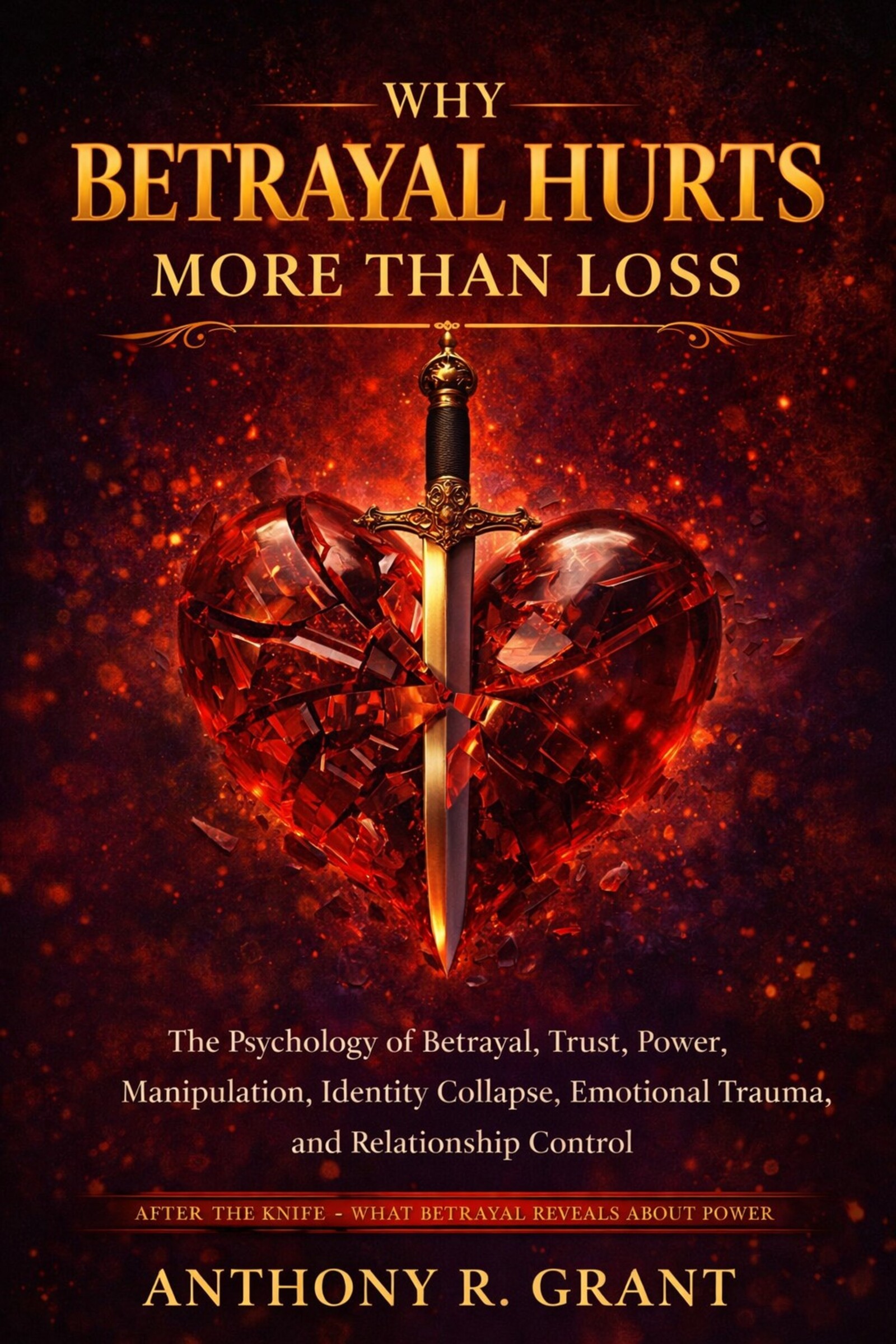
Why Betrayal Hurts More Than Loss asks why a friend's quiet drift away can outlast a death in the family. Built around historical stories — Theodore Roosevelt and William Howard Taft, Mary, Queen of Scots, a Soviet marshal on a white horse — the book traces why betrayal reaches backward into memory in a way ordinary loss never has to, forcing you to re-audit a past you thought you understood.
Anthony R. Grant offers no techniques or exercises, because betrayal is usually invisible until it's already happened. What the book offers instead is clarity — recognizing the pattern after the fact, so it holds a little less power the next time.
Readers working through the aftermath of betrayal — in a marriage, a friendship, or a partnership — who want to understand why it lingers the way it does, through historical distance rather than direct advice.